Original Questions and Verified Answers
Get the original questions and verified answers for your preparation about MTA Networking Fundamentals training dumps, and 100% pass is the guarantee of our promise. We put the interest of customers in the first place. So in order to meet the needs of our customer, we strive for making the best valid and accurate MTA Networking Fundamentals exam prep collection for all of you, and ensure you pass at first attempt with less time and energy investment. The Microsoft SQL Server 2008 98-366 questions are compiled from the original questions and checked and edited by our experienced experts. As we all know, it is not enough to ensure 100% pass just by the simulated questions, the accurate answers are very necessary for successful pass. While our MTA Networking Fundamentals dumps prep answers can satisfy your requirement. The question answers are verified by vast data analysis and checked by several processes, thus the high hit rate can be possible. Choose our MTA Networking Fundamentals free download training, you will not only gain a high test score, but also a broad spectrum of knowledge.
Schedule exam
Languages: English, Chinese (Simplified), Chinese (Traditional), French, German, Italian, Japanese, Korean, Portuguese (Brazil), Russian, Spanish, Spanish (Mexico)
Candidates for this exam are familiar with general networking concepts and the technologies. Candidates should have some hands-on experience with Windows Server, Windows-based networking, network management tools, DNS, TCP/IP, names resolution process, and network protocols and topologies.
MTA Networking Fundamentals VCE dumps for simulated practice
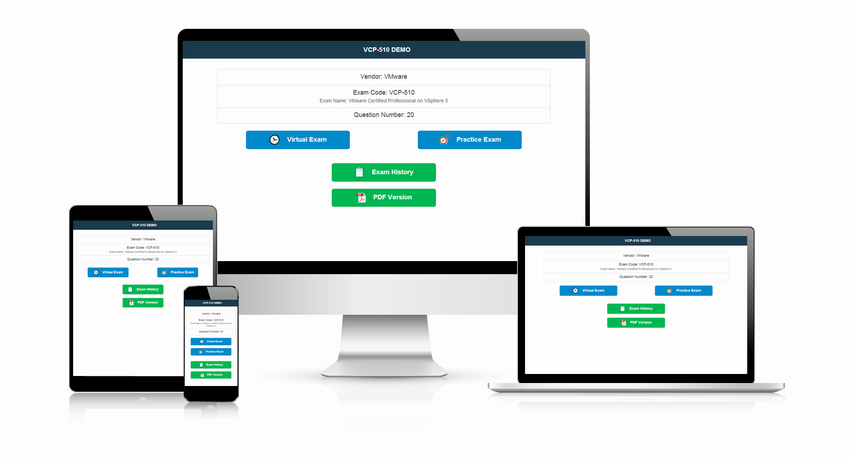
Except the pdf files, the MTA Networking Fundamentals VCE dumps are popular and welcome in the choosing of the IT candidates. If you want to experience the VCE format, you can select the MTA Networking Fundamentals pc test engine and online test engine as you like. In fact, Microsoft SQL Server 2008 98-366 VCE dump is a test simulator, which can bring you into a virtual real test environment. The interaction and intelligent properties of MTA Networking Fundamentals VCE format training have attracted many candidates, and motivate the enthusiastic for study of the Microsoft 98-366 actual test. You can get scores after each test, and can set each test time as you like with the MTA Networking Fundamentals VCE test engine. Besides, you can install it on your electric device and practice it at your convenience. Thus your spare time will be made full use of. With the simulated test engine, you can re-practice your test until you are sure to pass it. In addition, our MTA Networking Fundamentals VCE test engine is virus-free engine, so you can rest assured to install it on your device.
Dear every one, trust our MTA Networking Fundamentals training collection, you will get a high score in your first try.
Microsoft 98-366 Dumps Instant Download: Upon successful payment, Our systems will automatically send the product you have purchased to your mailbox by email. (If not received within 12 hours, please contact us. Note: don't forget to check your spam.)
Maybe you are a hard-work person who has spent much time on preparing for 98-366 exam test. While the examination fee is very expensive, you must want to pass at your first try. MTA Networking Fundamentals pdf vce dumps will provide you everything you will need to take for your actual test. The content of 98-366 exam test are researched and produced by our senior experts who have rich hands-on experience in IT industry. The precise and logical are the requirement during the edition for MTA Networking Fundamentals free demo torrent. From our Microsoft SQL Server 2008 study training, you will get knowledge different from books. Our MTA Networking Fundamentals actual test dumps will help you not only pass in the first try, but also save your valuable time and energy. Now hurry up to get a boost in your career and get your MTA Networking Fundamentals certification.

Exam 98-366: Networking Fundamentals
Candidates for this exam are familiar with general networking concepts and the technologies. Candidates should have some hands-on experience with Windows Server, Windows-based networking, network management tools, DNS, TCP/IP, names resolution process, and network protocols and topologies.
Part of the requirements for: MTA: Networking Fundamentals
Topics of Microsoft 98-366 : Networking Fundamentals
Candidates must know the exam topics before they start of preparation. because it will really help them in hitting the core. Our Microsoft 98-366 : Networking Fundamentals exam dumps will include the following topics:
1. Understanding network infrastructures (30-35%)
Understand the concepts of Internet, intranet, and extranet
- Virtual Private Network (VPN), security zones, firewalls
Understand local area networks (LANs)
- Perimeter networks; addressing; reserved address ranges for local use (including local loopback IP), VLANs; wired LAN and wireless LAN
Understand wide area networks (WANs)
- Leased lines, dial-up, ISDN, VPN, T1, T3, E1, E3, DSL, cable modem, and more, and their characteristics (speed, availability)
Understand wireless networking
- Types of wireless networking standards and their characteristics (802.11a,b,g,n,ac including different GHz ranges), types of network security (WPA, WEP, 802.1X, and others), point-to-point (P2P) wireless, ad hoc networks, wireless bridging
Understand network topologies and access methods
- Star, mesh, ring, bus, logical and physical topologies
2. Understanding network hardware (20-25%)
Understand switches
- Transmission speed, number and type of ports, number of uplinks, speed of uplinks, managed or unmanaged switches, VLAN capabilities, Layer 2 and Layer 3 switches and security options, hardware redundancy, support, backplane speed, switching types and MAC table, understand capabilities of hubs versus switches, virtual switches
Understand routers
- Transmission speed considerations, directly connected routes, static routing, dynamic routing (routing protocols), RIP vs. OSPF, default routes; routing table and how it selects best route(s); routing table memory, Network Address Translation (NAT), software routing in Windows Server, installing and configuring routing; Quality of Service (QoS)
Understand media types
- Cable types and their characteristics, including media segment length and speed; fiber optic; twisted pair shielded or unshielded; catxx cabling, wireless; susceptibility to external interference (machinery and power cables); susceptibility to electricity (lightning), susceptibility to interception
3. Understanding protocols and services (45-50%)
Understand the Open Systems Interconnection (OSI) model
- OSI model; Transmission Control Protocol (TCP) model; examples of devices, protocols, applications, and which OSI/TCP layer they belong to; TCP and User Datagram Protocol (UDP); well-known ports for most used purposes (not necessarily Internet); packets and frames
Understand IPv4
- Subnetting, IPconfig, why use Internet Protocol version 4 (IPv4), addressing, ipv4toipv6 tunneling protocols to ensure backward compatibility, dual IP stack, subnetmask, gateway, ports, packets, reserved address ranges for local use (including local loopback IP)
Understand IPv6
- Subnetting, IPconfig, why use IPv6, addressing, ipv4toipv6 tunneling protocols to ensure backward compatibility, dual IP stack, subnetmask, gateway, ports, packets, reserved address ranges for local use (including local loopback IP)
Understand names resolution
- DNS, resource records, Windows Internet Name Service (WINS), steps in the name resolution process, HOSTS file, LMHOSTS file
Understand networking services
- Dynamic Host Configuration Protocol (DHCP), Network Address Translation (NAT), firewalls, remote access, VPN
Understand TCP/IP
Tools (such as ping), tracert, pathping, Telnet, IPconfig, netstat, reserved address ranges for local use (including local loopback IP), protocols
Reference: https://www.microsoft.com/en-us/learning/exam-98-366.aspx


 Burton
 Hubery
  Winni
Winni 
 Vanessa
 Dave
Dave  Dominic
  Lambert
  Gail
Gail  Yetta
Yetta  Adam
Adam  Maria
Maria  Brandon
  Delia
Delia  Elvira
  Suzanne
  Jack
Jack  Nathan
  Vita
Vita