100% accurate and updated products
When you find our OGEA-103 TOGAF Enterprise Architecture Combined Part 1 and Part 2 Exam valid vce collection from plenty of dump information, you certainly want it to be the best valid and accurate OGEA-103 practice dumps, which can ensure you pass at first attempt. Now, we know time and energy are very precious for all of you. While the OGEA-103 vce cram can save lots of time and energy by providing the most accurate and updated OGEA-103 practice dumps. Our questions are edited based on vast amounts of original data, and the quantities and quality of OGEA-103 practice dumps are strictly controlled and checked by our senior professionals. The TOGAF Enterprise Architecture Combined Part 1 and Part 2 Exam OGEA-103 dump answers along with the questions are correct and with high accurate. Our professionals try best to make explanations easier to be understood for all of you. While, you may know there often have some changes about the OGEA-103 actual test, we guarantee to offer you the best latest OGEA-103 training material. Every day, there are specialists who trace and check if it is any update information about OGEA-103 study VCE. The new information is added into the The Open Group OGEA-103 study VCE, and the useless questions are deleted, thus you can get the best valid and refined OGEA-103 training material. Our OGEA-103 free demo pdf can provide you a better and efficiency study preparation for your coming test, a 100% success is no longer the problem.
Printing of PDFs allowed
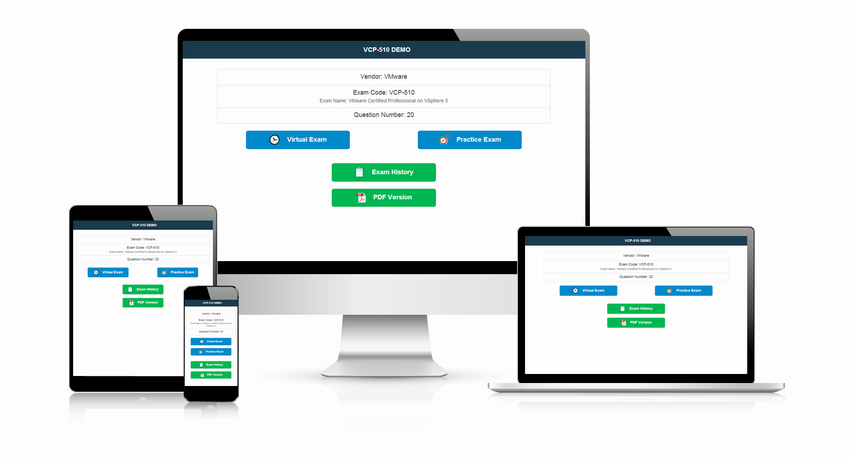
OGEA-103 PDF file is the common choice by many IT candidates. You can download and store in your phone or your computer, and scan and study it. While there are many people choose to print OGEA-103 practice dumps into paper study material for better memory. OGEA-103 paper dumps is available to make notes, you will find the notes obviously when review next time. TOGAF Enterprise Architecture Combined Part 1 and Part 2 Exam OGEA-103 valid study collection will give you an in-depth understanding of the contents and help you to make out a detail study plan for OGEA-103 TOGAF Enterprise Architecture Combined Part 1 and Part 2 Exam preparation. All the questions are researched and produced according to the analysis of data and summarized from the previous test, which can ensure the high hit rate. You just need take the spare time to study OGEA-103 PDF file, then the knowledge you get from the OGEA-103 practice dumps are enough for passing the actual test. Beside, you will enjoy one year free update after purchasing our The Open Group OGEA-103 training material.
OGEA-103 valid test training will be a breeze to get your OGEA-103 certification. We will help whenever you need: 24*7 dedicated email and chat support are available. Besides, we ensure you a flawless shopping experience by Credit Card. You can get passed by our valid OGEA-103 practice dumps.
Do you want to be outstanding in the job interview? You may know, the employer will admire the people who are certified by OGEA-103 certification. People who get the OGEA-103 certification show dedication and willingness to work hard, also have strong ability to deal with issues during work. It seems that TOGAF Enterprise Architecture Combined Part 1 and Part 2 Exam OGEA-103 certification becomes one important certification in the IT industry. While, a good study material will do great help in The Open Group OGEA-103 exam preparation. OGEA-103 latest training dumps will solve your problem and bring light for you.

The Open Group OGEA-103 Dumps Instant Download: Upon successful payment, Our systems will automatically send the product you have purchased to your mailbox by email. (If not received within 12 hours, please contact us. Note: don't forget to check your spam.)
The Open Group OGEA-103 Exam Syllabus Topics:
| Section | Weight | Objectives |
|---|---|---|
| Topic 1: Part 2: TOGAF Enterprise Architecture Practitioner | 50% | - Applying ADM in Practice
|
| Topic 2: Part 1: TOGAF Enterprise Architecture Foundation | 50% | - Introduction to Enterprise Architecture
|
The Open Group TOGAF Enterprise Architecture Combined Part 1 and Part 2 Sample Questions:
1. Consider the following statements:
The TOGAF ADM requires a partitioning model for architecture development Architectures are partitioned when different teams need to work on different elements of the architecture at the same time Partitions can be used to facilitate architecture re-use Which statements about Architecture Partitioning are correct?
A) 1 and 2
B) 1, 2 and 3
C) 1 and 3
D) 2 and 3
2. Please read this scenario prior to answering the question
You are employed as an Enterprise Architect at a multinational energy company. The company is committed to reducing its emissions. To achieve this, the company is increasing production of renewable energy and adopting eco-friendly practices.
The company has an Enterprise Architecture (RA) practice and follows the TOGAF standard for its EA framework. The EA team manages all the major projects in the company. The EA team reports to the Chief Technical Officer (CTO), who is the sponsor of the EA program. The Architecture Board is made up of senior leaders from all parts of the company.
The company is starting to invest in developing various kinds of renewable energy projects, including solar, and wind. A large part of the growth in its renewable energy portfolio has come from buying other companies.
The company is keen on acquiring small startups and mid-size companies to leverage their technical innovations. This way, the company aims to outperform its competitors, scale rapidly, and establish a presence in new markets.
The existing business and the newly acquired companies are not working well together, which increasingly causes problems. In response, a strategic plan was created and approved. The plan aims to make the merged companies work more effectively together. This will save money by sharing their common assets, including fixed capital assets, research and development facilities, and resources.
The EA team have been asked to oversee the transformation to carry out the strategic plan. A Request for Architecture Work for the project has created and has been approved. The goal is to strengthen the company ' s position in the market and reduce costs by taking advantage of economies of scale. The Chief Executive Officer (CEO) has stated that to stay competitive and relevant, the company must transform or entirely reinvent its business model.
Refer to the Scenario
What needs to be done to make sure that the company succeeds with the changes and how should risks be managed?
Based on the TOGAF standard, which of the following is the best answer?
A) The EA team should develop a set of Business Architecture views to demonstrate how stakeholder concerns are being addressed. These views can also be used to identify the factors that will impact the transformation. For each factor identified, there should be a structured assessment of the current state of each factor against a maturity model. This information can then be used to determine the potential risks associated with the transformation, and areas where better preparation is needed.
B) The EA team should use the Business Scenarios technique to describe the business problem,identify the stakeholders ' concerns and achieve consensus on the requirements. Once therequirements have been identified, they can be evaluated in terms of their risks. The risks should be assessed in terms of how they can be avoided, transferred, or reduced. Risks that cannot beresolved should be identified as residual risks and how to address them should be decided by theArchitecture Board.
C) The EA team should document the risks associated with the transformation in an Implementation Factor Catalog. This will be used as a record of important decisions during implementation and deployment for the transformation effort. The catalog should list all the factors to consider, their descriptions, and any limitations to consider. These factors can then be used to help evaluate the risks, which can be documented in the Implementation and Migration Plan.
D) The EA team needs to identify obstacles that could hinder the project. This should include identifying the factors that will impact the transformation, and determining the readiness level for each factor based on a scale that will help the team to understand the urgency, readiness, and degree of difficulty to fix.These factors can be used to evaluate the initial risks of the change, areas of risk that need attention, and areas where you need to prepare the staff and systems better.
3. What are the four dimensions used to scope an architecture?
A) Strategy Portfolio Project Solution Delivery
B) Strategy Segment Capability Budget
C) Business Data Application Technology
D) Breadth Depth Time Period Architecture Domains
4. Please read this scenario prior to answering the question
You are employed as an Enterprise Architect at a technology company, reporting directly to the Chief Enterprise Architect. The company supplies personnel and delivers cloud- based solutions to numerous government agencies.
The nature of the business is such that the data and the information stored on the company systems is the company ' s major asset and is highly confidential. The company employees work remotely and need constant access to the company systems, which is done by the public infrastructure. They use message encryption, secure internet connections using Virtual Private Networks (VPNs), and other standard security measures. The company provides computer security awareness training for all its staff.
The Chief Security Officer (CSO) has noted an increase in distributed denial of service (DDoS) attacks on companies with a similar profile. The CSO understands that even with thorough preparation, a major attack could stop employees from being able to do their jobs. This could lead to a large financial loss, damage to the company ' s reputation with customers, and employees being unable to work.
A risk assessment has been completed and the company has looked for cyber insurance that covers such attacks. The price for this insurance is very high. The CTO has decided not to get cyber insurance to cover such attacks.
The company follows the TOGAF standard as the method and guiding framework for its Enterprise Architecture (EA) practice. The Chief Technology Officer (CTO) is the sponsor of the activity. The practice uses an iterative approach for its architecture development.
This has enabled the decision makers to gain valuable insights into the different aspects of the business Please read this scenario prior to answering the question You have been asked to describe the steps you would take to strengthen the current architecture to improve data protection.
Based on the TOGAF standard which of the following is the best answer?
A) You would hold an Architecture Compliance Review with the scope to examinethe company ' s ability to respond to such attacks. You would identify thedepartments involved and have them nominate representatives. You wouldthen tailor checklists to address the requirement for increased businesscontinuity and resilience. You would circulate the checklists to the nominatedrepresentatives for them to complete. You would review the completedchecklists, identifying and resolving issues. You would then determine andpresent your recommendations to the Architecture Board.
B) You would ensure that business value and cost of continuity measures areunderstood by key stakeholders, and that the company has in place up-to-dateprocesses for managing change to the current Enterprise Architecture. Yourecommend that DDoS mitigation be addressed at the infrastructure level toensure effective, scalable protection. Changes should be made to the baselinedescription of the Technology Architecture. The changes should be approvedby the Architecture Board and implemented by change managementtechniques.
C) You would run a planning exercise to assess the business continuityrequirements and analyze the current Enterprise Architecture for gaps. Youcreate a formal change request related to business resilience and maintainingcritical business functions. You would arrange a meeting of the ArchitectureBoard to assess and approve the change request. Once approved you wouldcreate a new Request for Architecture Work to begin an ADM cycle toimplement the changes.
D) You would request technology updates from existing suppliers that improve thecompany ' s capabilities to detect, react, and recover from an incident. Youwould run a simulated ransomware attack to evaluate the current EnterpriseArchitecture ' s resilience and recovery capabilities. Using the findings, youwould perform a gap analysis of the current Enterprise Architecture, andprepare change requests to address identified gaps. You would document thechanges implemented and add to the Architecture Repository.
5. In which section of the TOGAF template for Architecture Principles would a reader find the answer to the question of "How does this affect me?"
A) Implications
B) Rationale
C) Name
D) Statement
Solutions:
| Question # 1 Answer: D | Question # 2 Answer: D | Question # 3 Answer: D | Question # 4 Answer: C | Question # 5 Answer: A |


 Webb
Webb 
 Ronald
 Gerald
 Algernon
  Claude
  Ina
Ina  Elma
Elma  Osborn
  Kenneth
  Henry
Henry  Morgan
  Daniel